Cracking Communication
Babies are born as natural communicators.
From the very beginning, they are curious about others and finely attuned to
interaction. Communication and connection help children to build social
relationships, opening doors to friendship, empathy and shared emotions.
Through these interactions, they learn to express themselves exploring
thoughts, needs and feelings. Early language development is a cornerstone for
lifelong learning and future success, underpinning every area of growth.
Source: Cracking communication toolkit
At Wootton Bassett Infant School we welcome the children at the start of their educational journey, and we understand the importance of strong language skills and communication.
At home
To become confident communicators, children need people who matter to them-adults with whom they share warm, trusting relationships. When children hear language regularly from familiar adults, these moments become rich with meaning, helping them to feel valued and connected. Everyday moments – reading, chatting, singing and playing- create a rich learning environment. Parents and cares are central to this process as their child’s strongest influence.
At school
In the EYFS, communication and language are
fundamental core skills that are developed and assessed as the children
progress through the year. They are further strengthened as the children move
into KS1. Meaningful, high- quality interactions are prioritised throughout our
school, and we use a range of strategies every day. We use several strategies
as part of the Cracking Communication programme, and we would like to share
these with you as we know our children will thrive on conversation with the people
they have strong relationships with.
· ShREC approach
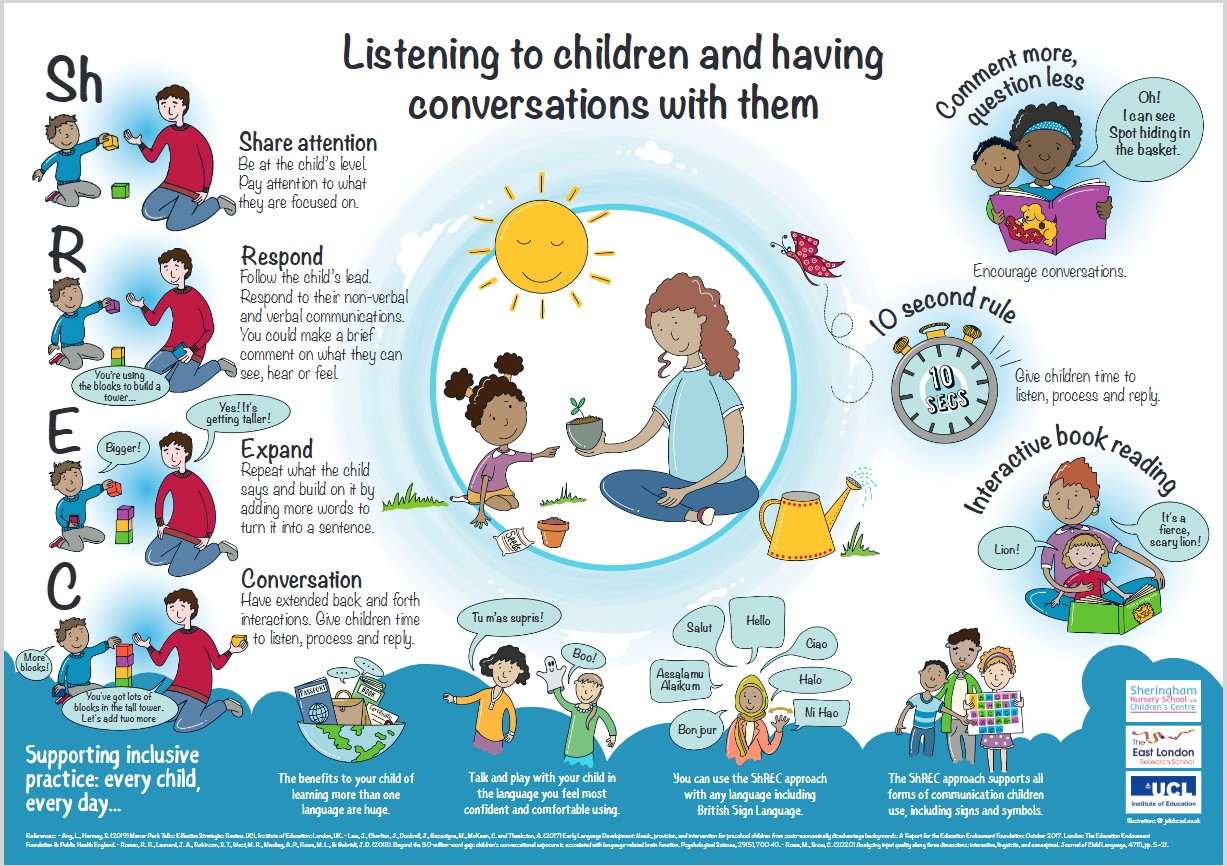
Tiny Happy People is a BBC website full of advice on children’s language development, with ideas for how you can help your child to learn, activities to put these into practice and information on the benefits of doing them. For more information and support click on the links below.
Reading and sharing books
Reading books together provides many opportunities for developing language and communication skills. Storytime strengthens bonds and supports language growth, listening, focus and attention, and lays the foundation for future learning. Reading aloud is more than an activity; it is an essential part of creating a rich, language-filled environment. Follow the link to our reading page on the school website to discover more about the benefits of reading to and with your child and how you can support your children at home.
Speech
and language support
If your child is struggling with their language and communication skills there are services available that can support them and provide you with you activities that you can do to help. We pride ourselves in school on early identification and early referrals to the speech and language service in Wiltshire as we know how important it is to get the support needed as early as possible.
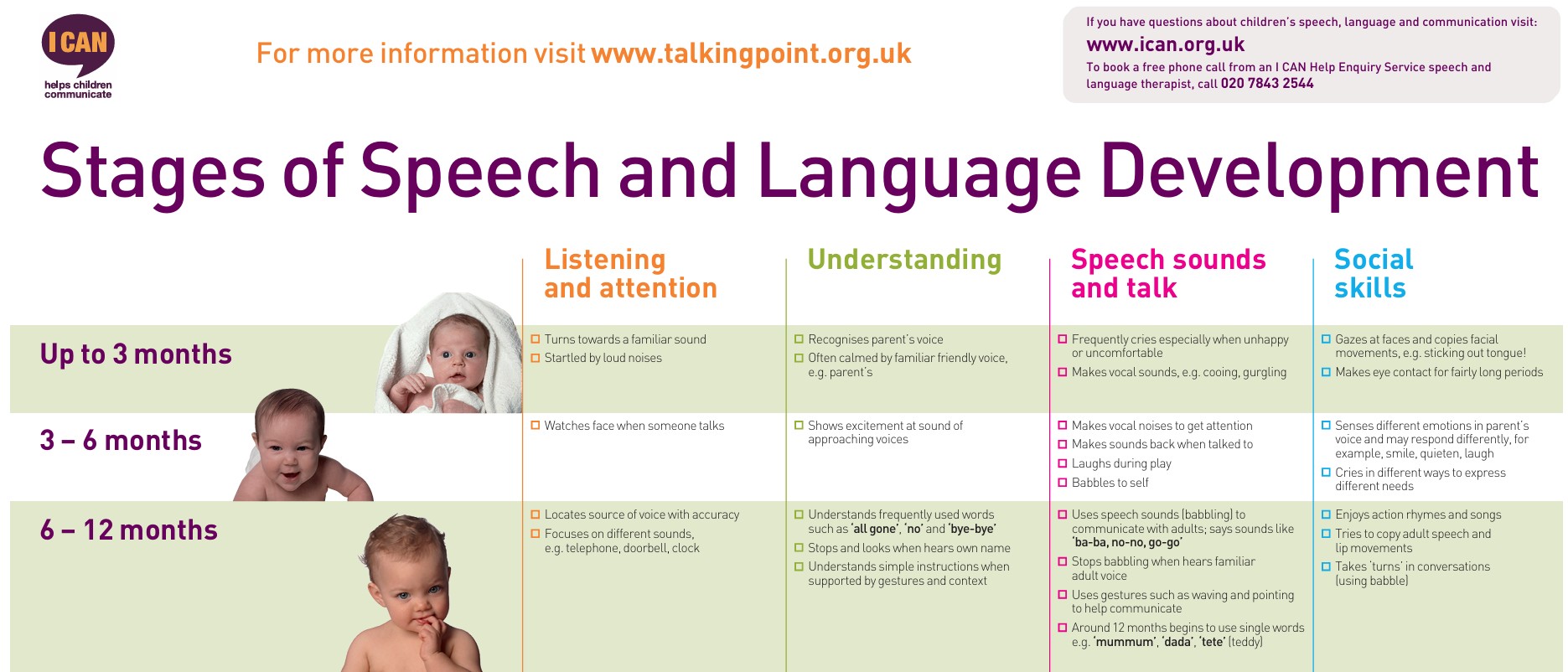
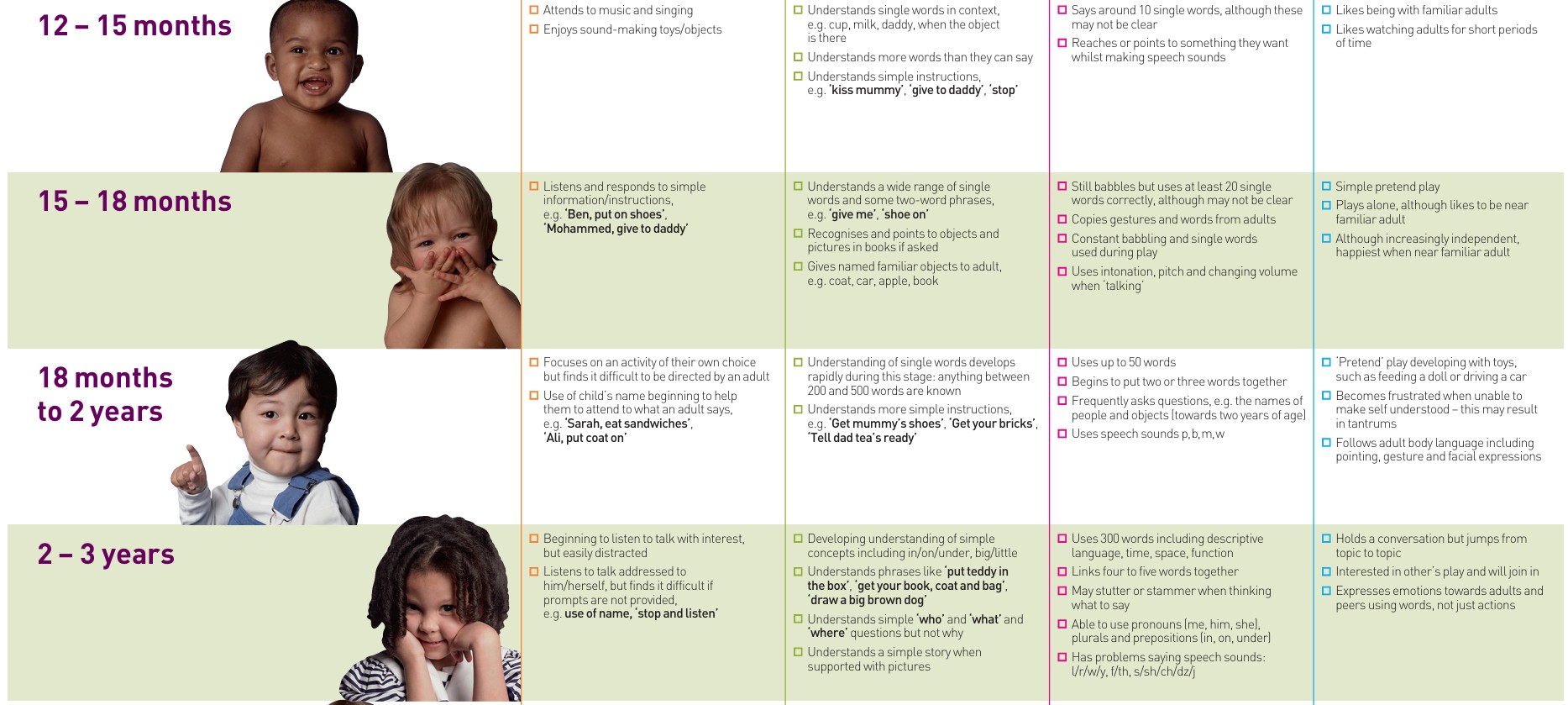
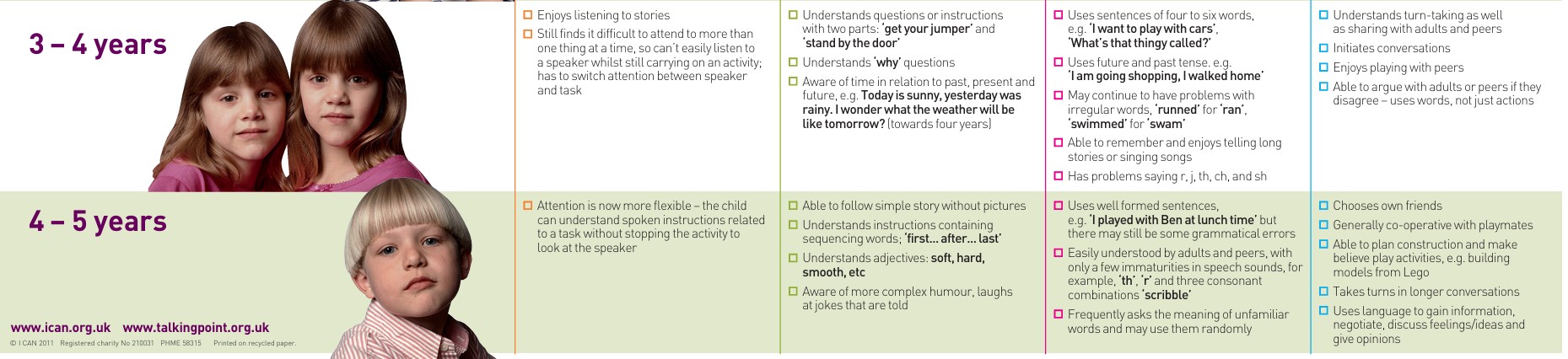
Universally Speaking, The ages and stages of children’s communication development, From birth to 5 years
If you have any concerns about the development of your child’s speech and language, please get in contact with the class teacher, the SENDCo or the headteacher and we can signpost, refer or support you to outside agencies that can help.
